
Growing with HYBRAIN: An Early-Career Researcher Perspective
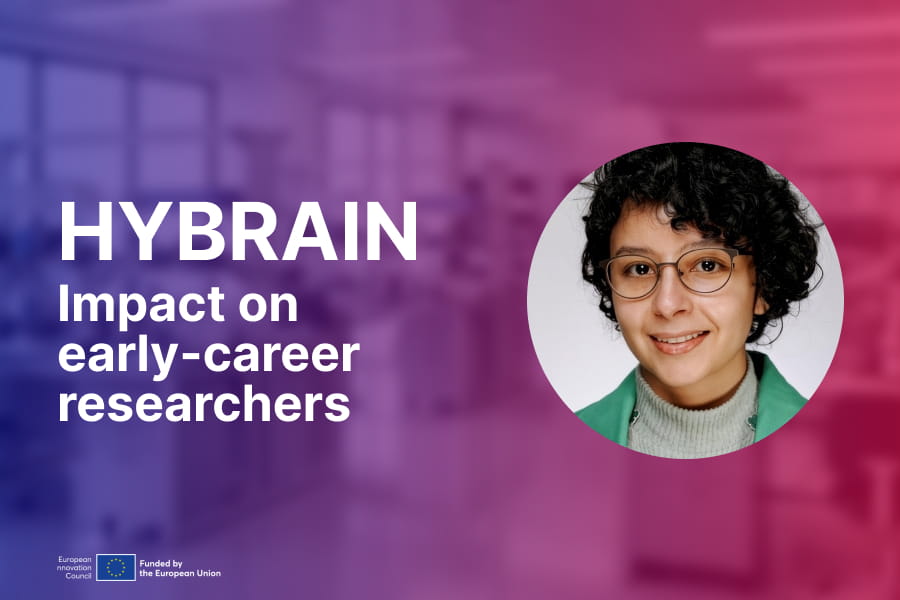
As HYBRAIN draws to a close, we are looking back at the people who helped shape it. Beyond its scientific results, the project has been a training ground for a new generation of researchers working across disciplines and borders.
In this interview, Shabnam Taheriniya, Scientific researcher at the Kirchhoff Institute for Physics, Heidelberg University, reflects on how being part of HYBRAIN has influenced her growth, her approach to research, and the skills she will carry into the next stage of her career.
Looking back to when you first joined HYBRAIN. How have you changed as a researcher since then?
Looking back to when I first joined HYBRAIN, I have become more ambitious and systematic as a researcher. I now set clearer, more challenging goals and approach research questions with a stronger focus on long-term impact.
What are the most valuable skills or expertise you have gained through HYBRAIN?
Coordination, adaptability, decisive problem-solving, stress management, and diplomatic communication.
Has HYBRAIN changed the way you approach research? If so, how?
I have developed a more structured way of working: I break complex problems into manageable steps, plan experiments and analyses more carefully, and evaluate results critically before drawing conclusions. This has helped me become more independent, efficient, and confident in developing research ideas and turning them into meaningful outcomes.
What was the main challenge you faced while working on HYBRAIN, and how did you overcome it?
The main challenge was aligning with researchers from different disciplines and collaborating with them productively. I overcame this by carefully managing and planning deliverables around a shared deadline, while making decisions based not only on the merits of each issue but also on their impact on the final deliverable’s completeness and timeline.
Based on your HYBRAIN experience, would you recommend other early-career researchers to work on an EU-funded research project? If yes, why?
Yes. It is a transformative experience that provides a realistic understanding of how EU-funded projects are initiated and developed, how challenges are managed, how different groups collaborate toward a common goal, and how resources must be effectively managed in such an environment.